
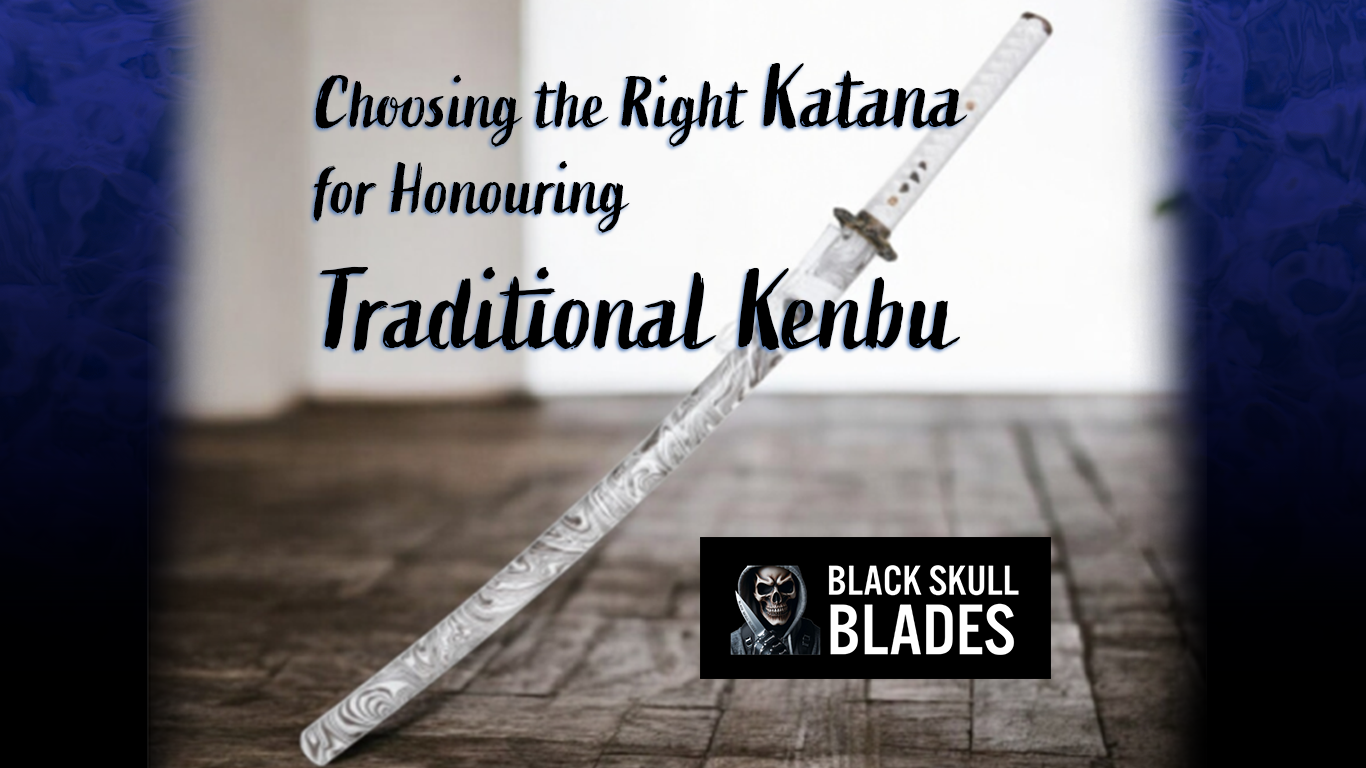
What Traditional Handling Teaches Us About the Sword
A katana can be striking to look at, but traditional Japanese sword arts teach an important lesson: a sword should be chosen for how it handles, not simply how it looks.
At Black Skull Blades, we believe understanding the relationship between traditional sword handling and katana design helps collectors and martial-arts enthusiasts make much better choices.
Traditional Handling Starts With Control
In iaido, practitioners study drawing, handling, cutting motions, and returning the sword to its saya through highly controlled forms. The emphasis isn’t on making large, dramatic movements. Instead, posture, grip, timing, and economy of movement all matter.
That principle translates surprisingly well when choosing a modern katana.
A sword that looks impressive in a display case may not necessarily feel balanced or comfortable in the hand. Conversely, a relatively understated katana can feel exceptionally natural because its proportions, weight distribution, grip, and geometry work together.
The best katana is the one whose design matches what you intend to do with it.
The Relationship Between Handling and Katana Design
Several characteristics have a noticeable effect on how a katana feels.
Blade Length
Longer blades can provide a different sense of reach and leverage, while shorter blades can feel more manageable and maneuverable.
For someone primarily interested in display, blade length may come down to aesthetics and available space. For someone studying a sword art, however, the appropriate length should be determined by the requirements of the particular school and instructor.
Weight and Balance
Overall weight is only part of the equation.
Two swords can weigh the same but feel completely different because their mass is distributed differently. A katana with more weight toward the blade can feel very different from one with a balance point closer to the hands.
This is why specifications such as blade length, weight, and balance are worth considering together rather than individually.
Tsuka and Grip
The handle isn’t merely decorative.
Traditional sword handling relies on a controlled grip and coordinated movement of both hands. A tsuka that feels excessively thick, thin, long, or poorly fitted can change the way a sword feels in the hands.
For anyone intending to practice iaido or another Japanese sword discipline, the grip should complement the equipment and methodology prescribed by their instructor.
Blade Geometry
The shape and construction of a blade influence both its appearance and handling characteristics.
A katana intended primarily as a display piece can prioritize visual details such as hamon appearance, fittings, and polish. A sword intended for legitimate martial-arts practice has a different set of considerations, including appropriate construction, maintenance, and suitability for the specific training method.
So Which Katana Should You Choose?
Start with purpose, rather than appearance.
- For display: prioritize aesthetics, fittings, craftsmanship, and how well the sword complements your collection.
- For iaido practice: consult your instructor before purchasing. Training swords and practice equipment should match the requirements of your particular school.
- For collecting: consider historical style, blade geometry, fittings, materials, and overall craftsmanship.
- For a first katana: look for a balanced combination of quality, appropriate dimensions, secure construction, and a design that you genuinely enjoy owning.
Traditional iaido is particularly useful as a reference point because the discipline treats the sword as part of a larger system of posture, movement, concentration, and control. Iaido
Don’t Choose a Katana by Looks Alone
A dramatic hamon or elaborate tsuba may catch your eye first—but handling reminds us that a katana is an integrated object.
The blade, tsuka, fittings, saya, dimensions, weight, and balance all contribute to the experience.
That’s why choosing a katana should begin with a simple question:
What do you want the sword to be?
A historically inspired piece? A training sword selected with the guidance of your instructor?
Once you know the answer, the right katana becomes much easier to identify.
**For martial-arts practice, use only equipment appropriate to your training system and follow qualified instruction. A live blade should never be handled or practiced with casually.


Leave a Reply