
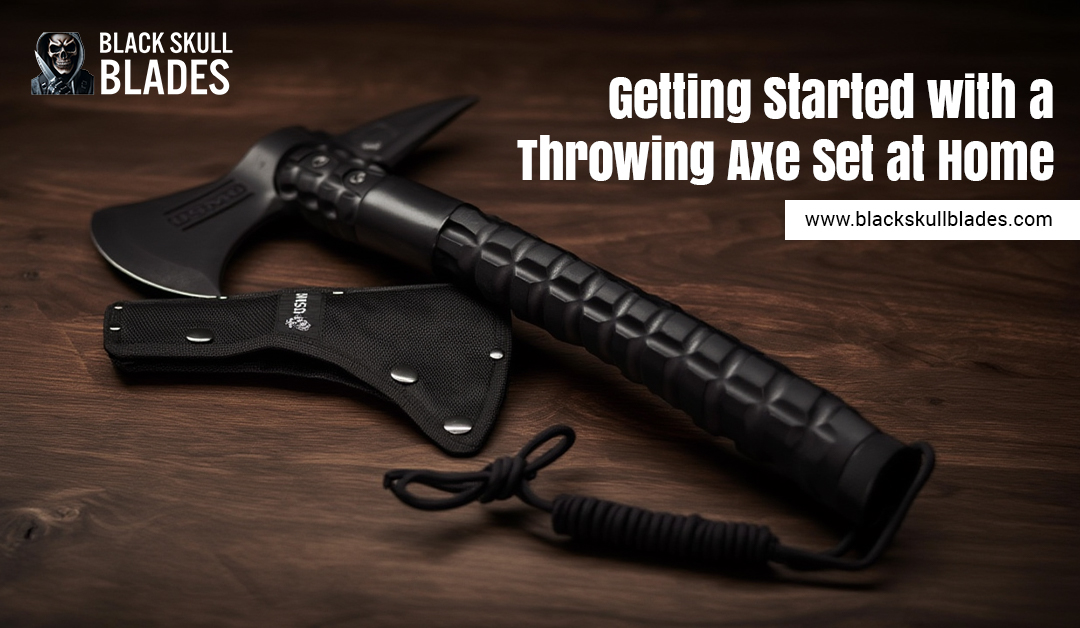
Setting up a backyard range is the ultimate way to blow off steam after a long week. We see more Canadians picking up this hobby every single year. It offers a mix of physical skill and mental focus that few other sports can match. At Black Skull Blades, we want to help you master the art of the stick. Picking up your first throwing axe set is just the beginning of a very addictive journey. We provide the gear you need to transform your outdoor space into a professional-grade throwing lane. You do not need a massive acreage to enjoy this. You just need the right setup and a bit of patience.
Picking the Right Spot for Your Targets
Location is the first thing you must nail down. You need a flat area with a solid backstop. Think about what sits behind your target. You do not want a stray throw hitting a neighbour’s fence or a parked car. We suggest a space at least twenty feet long. This gives you room for the standard twelve-foot throw plus some safety buffer. Make sure the ground is soft grass or dirt. Hard surfaces like gravel or concrete will chew up your handles. Wood chips are also a great option to cushion the blow of a dropped axe. We want your gear to last through thousands of throws.
Understanding Axe Geometry and Balance
Not every hatchet works for throwing. A proper throwing axe has a thin profile and a straight handle. We look for a balance point that sits just below the head. This helps the tool rotate predictably through the air. If the head is too heavy, the rotation becomes sluggish. If it is too light, it might not have the momentum to stick. Most beginner throwing axe sets feature a one-piece steel construction. This design is incredibly durable. You won’t have to worry about the head flying off the handle after a few misses. It provides a consistent feel every time you step up to the line.
Why Blade Maintenance is a Necessity
Sharpness matters more than you might think. A dull axe requires more force to stick. This extra force ruins your accuracy. Use a simple whetstone to keep the edge clean. You do not need a serrated-edge blade for this sport. You want a smooth, clean bevel. A blade would actually make the axe harder to pull out of the wood. We recommend wiping the steel with a light coat of oil after use. This prevents rust during our humid Canadian summers. If you use wooden handles, check for splinters. Sand them down and apply linseed oil to keep the wood from getting brittle.
Dealing with the Infamous Bounce-Back
Every thrower deals with bounce-backs. This happens when the axe hits the target at a bad angle or strikes another axe. When this occurs, stay calm and stay back. Most injuries happen when people rush forward to grab their gear. Wait for the axe to stop moving completely on the ground. This is another reason why soft ground is vital. It absorbs the energy of the bounce. We want you to develop a rhythm. Throw, wait, observe, and then retrieve. Taking your time makes the hobby safer and more relaxing.
Competing with Friends and Family
Axe throwing is a social event. We love setting up small tournaments in the yard. You can use the standard point system. The bullseye is worth six points. The outer rings are worth four, three, and two. You can even paint “clutch” spots in the upper corners for extra points. It adds a layer of pressure that hones your skills. Sharing the lane allows you to watch others and learn from their mistakes. We find that a little friendly competition makes the practice sessions much more engaging. Just make sure everyone follows the safety rules.
Adapting to the Canadian Seasons
Our weather changes fast. Throwing in the winter is possible, but it requires tweaks. Frozen wood is much harder than warm wood. Your axes might bounce off a frozen target like it were a brick wall. We suggest keeping your targets covered or bringing them into a garage when not in use. If the wood is frozen, you might need to throw with a bit more power. Wear layers that allow for a full range of motion. A heavy parka will ruin your swing. We find that a thick flannel shirt or a vest works best for winter sessions.
Moving Beyond the Basics
Once you can stick ten throws in a row, start aiming for specific spots. Do not just hit the board. Aim for a knothole or a specific line in the wood. This builds the precision needed for trick shots. You might even try underhand throws or double-bit axes later on. However, do not rush the process. Mastery comes from doing the simple things perfectly. We take pride in seeing our customers progress from shaky beginners to confident throwers. Stick with the fundamentals, and the flashy stuff will come naturally.
Why Choose Black Skull Blades
We are more than just a shop. We are enthusiasts who live for the sport. We curate our selection to ensure every item meets high standards for durability. Buying online in Canada should be easy and reliable. We handle the logistics so you can focus on your aim. Black Skull Blades team is always here to offer advice on setups or maintenance. We believe that everyone should have access to quality gear that lasts. Your journey into axe throwing deserves a solid start with tools you can trust.
Frequently Asked Questions
Q: What is the best wood for a backyard axe target?
Softwoods are the superior choice for any home setup. Pine, spruce, and cedar are easy to find at local hardware stores. These woods allow the axe to sink in deeply without requiring massive force. They also tend to be cheaper to replace as they get chewed up.
Q: How much space do I really need to throw safely?
You should have at least fifteen to twenty feet of clear distance. The target sits at twelve feet, but you need space behind you for the swing. A wide safety buffer on the sides is also necessary. Ensure no windows or fragile items are within twenty feet of the target area.
Q: Can I use a regular hardware store hatchet for throwing?
A standard hatchet can work, but it is not ideal. Most have heads that are too heavy or handles with too much curve. Purpose-built throwing axes have a specific balance and a thinner bit. Using the right tool makes learning the rotation much faster and more enjoyable.
Q: How often should I sharpen my throwing axes?
You should touch up the edge after every few sessions. You do not need it to be razor-sharp like a kitchen knife. It just needs to be thin enough to bite into the wood. If you notice the axe bouncing off flat, it is likely time to grab the whetstone.
Read Related Blogs:
https://blackskullblades.com/beginners-guide-to-buying-a-straight-edge-shaving-razor/
https://blackskullblades.com/are-straight-edge-razors-the-sustainable-shaving-choice/





Leave a Reply