
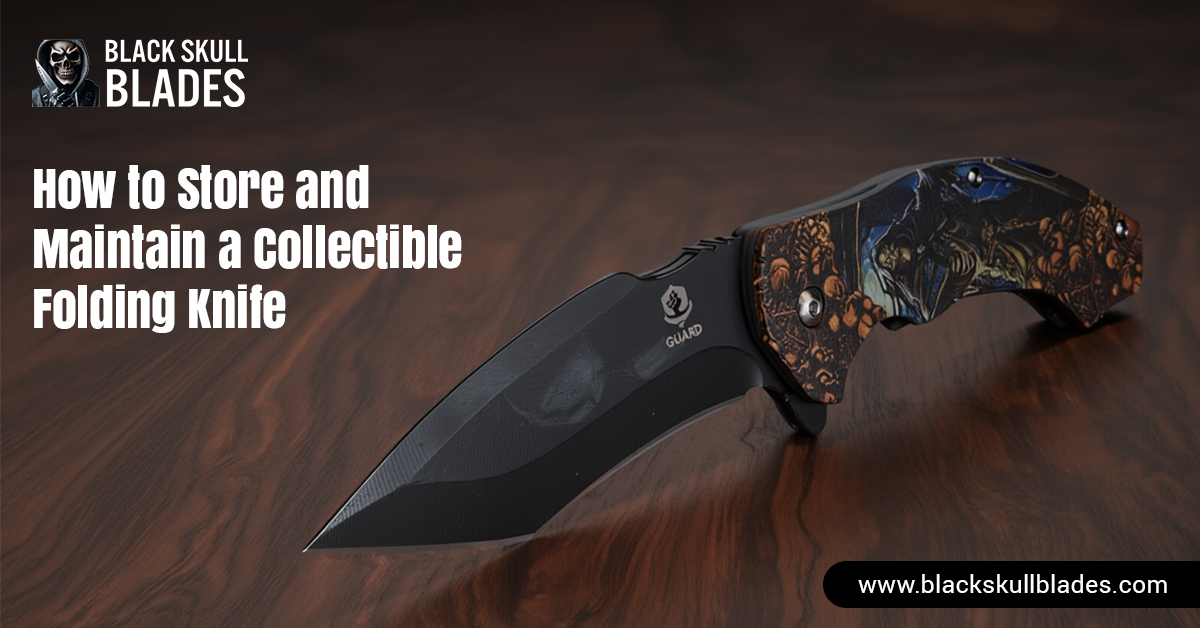
Owning a high-quality collectible folding knife in Canada is a point of pride for any gear enthusiast, but your investment only lasts as long as your maintenance routine. Storing these pieces isn’t just about tossing them in a drawer; it’s about preventing rust, maintaining the pivot’s smoothness, and ensuring the lock mechanism stays safe for years to come. Our Canadian climate, with its humid summers and bone-dry, salty winters, can be brutal on premium steel and handle materials like G10 or bone. If you want your blade to retain its value and function perfectly every time it clicks open, you need a solid plan for climate control and regular lubrication.
Why Black Skull Blades Cares About Your Steel
We at Black Skull Blades know that a knife is more than just a tool; it’s a piece of functional art. When you pick up a piece from us, you’re getting something designed to last a lifetime, provided you treat it with respect. Our team lives for the “thwack” of a perfectly tuned flipper, and we’ve seen too many great blades ruined by simple neglect. Proper storage keeps the action snappy and the edge razor sharp. We want your collection to look as good ten years from now as it did the day you unboxed it.
How Do I Keep Rust Off My Blade?
Humidity is the silent killer of high-carbon steels and even some “stainless” varieties. Living in the Great White North means dealing with massive temperature swings that cause condensation inside storage cases. You should always wipe your blade down after touching it, as the oils from your skin contain salts that eat away at the finish. A thin coat of food-grade mineral oil or a specialized synthetic knife lubricant acts as a barrier against the air. If you store your knives in a safe or a hard case, tossing in a few silica gel packets will soak up excess moisture. Check your blades every few months, even if you aren’t using them, just to make sure no spots are forming.
Where Is The Best Place To Keep A Folding Knife?
Avoid leather sheaths for long-term storage because the chemicals used in tanning can actually pull moisture toward the metal. Instead, look for padded knife rolls or glass-topped display cases that allow for some airflow. If you’re also a fan of cosplay masks and accessories in Canada, you likely already know that keeping gear away from direct sunlight is crucial. UV rays can fade handle materials like Micarta or wood over time. A cool, dark, and dry spot is the gold standard. Most collectors prefer a dedicated felt-lined drawer where knives won’t bang against each other, which prevents unnecessary scratches on the bolsters and clips.
Maintenance Tips for a Collectible Folding Knife in Canada
Keeping your gear in top shape requires a bit of “elbow grease” and the right tools. You don’t need a professional workshop, but a few basics go a long way.
- Clean the Pivot: Use a compressed air can to blow out pocket lint and dust from the hinge area.
- Lubricate Sparingly: One drop of oil on the bearings or washers is plenty; too much oil actually attracts dirt and creates a gritty paste.
- Check the Screws: Pocket knives vibrate in your pocket or move during use, which can loosen Torx screws. Give them a tiny snugging with a driver every month.
- Wipe the Liners: Don’t forget to clean the inside of the handle where the blade sits when closed, as moisture loves to hide there.
- Sharpen Early: Honing the edge frequently with a ceramic rod is much easier than performing a full regrind after the blade goes dull.
Essential Gear for Storing Cosplay Masks and Accessories in Canada
Many of our customers who collect blades also dive deep into the world of high-end costuming and prop replicas. Caring for these items follows similar rules to knife maintenance, focusing on material integrity and environmental protection.
- Use Padded Mannequin Heads: Storing masks on a stand prevents the material from warping or cracking under its own weight.
- Avoid Plastic Bags: Sealed plastic can trap gasses and moisture, leading to “sweating” that ruins paint jobs on resin or foam.
- Keep Away from Heat: Never store your gear near a radiator or heating vent, as high heat can melt adhesives and make plastics brittle.
- Dust Regularly: A soft microfiber cloth or a makeup brush is perfect for getting into the nooks and crannies of intricate armor pieces.
- Climate Control: Just like with your knives, a stable temperature prevents materials from expanding and contracting.
Keeping the Action Smooth and Reliable
Every collectible folding knife in Canada deserves a bit of TLC once the seasons change. If the blade starts to feel sluggish or “mushy” when you open it, that’s a sign that old oil has thickened up or trapped debris. You can usually fix this without taking the whole knife apart. Use a toothpick to get a tiny bit of high-quality grease onto the detent ball. This is the little ball that holds the blade closed and provides that satisfying “pop” when you open it. A well-maintained knife should feel like it’s gliding on ice. If you do decide to disassemble your knife for a deep clean, make sure you have a magnetic tray to hold those tiny screws, because losing one is a nightmare.
Frequently Asked Questions
Q: Can I use WD-40 on my folding knife?
Avoid using WD-40 for long-term lubrication. It is a solvent designed to displace water, not a dedicated lubricant. Over time, it leaves a sticky residue that attracts pocket lint and gunk. Stick to dedicated knife oils or mineral oil for much better results.
Q: How often should I oil my knife blade?
Apply a light coat of oil every time you use the knife or once a month if it sits in a display. If you live near the ocean or in a humid province, you might need to do this more frequently to prevent surface pitting.
Q: Is it okay to store knives in their original boxes?
Original cardboard boxes are fine for short periods, but they can absorb moisture from the air. For a high-end collectible folding knife in Canada, we recommend a weather-sealed hard case or a wooden chest with a felt lining for maximum protection.
Q: What is the best way to clean a dirty handle?
For G10 or plastic handles, a bit of warm soapy water and an old toothbrush work wonders. If the handle is wood or bone, use a damp cloth and dry it immediately. Never soak your knife in a sink, as water gets trapped in the pivot.
Conclusion
Taking care of your collection is a rewarding hobby that ensures your gear stays functional and beautiful. We at Black Skull Blades believe that a little bit of prevention goes a long way in preserving the history and craftsmanship of every blade. By managing humidity, choosing the right storage containers, and keeping the pivot clean, you protect your investment from the elements. Whether you are a hardcore woodsman or a shelf-queen collector, these steps are the baseline for quality ownership.
Browse Our Latest Collection at Black Skull Blades
Read Related Blogs:
https://blackskullblades.com/what-canadian-cosplayers-look-for-in-masks-and-accessories/ https://blackskullblades.com/the-craft-behind-realistic-looking-foam-cosplay-swords/




Leave a Reply